

Medical weight loss
How GLP-1 Medications Naturally Control Hunger and Cravings
For millions of people struggling to lose weight, hunger and intense food cravings can be the biggest roadblocks. The constant
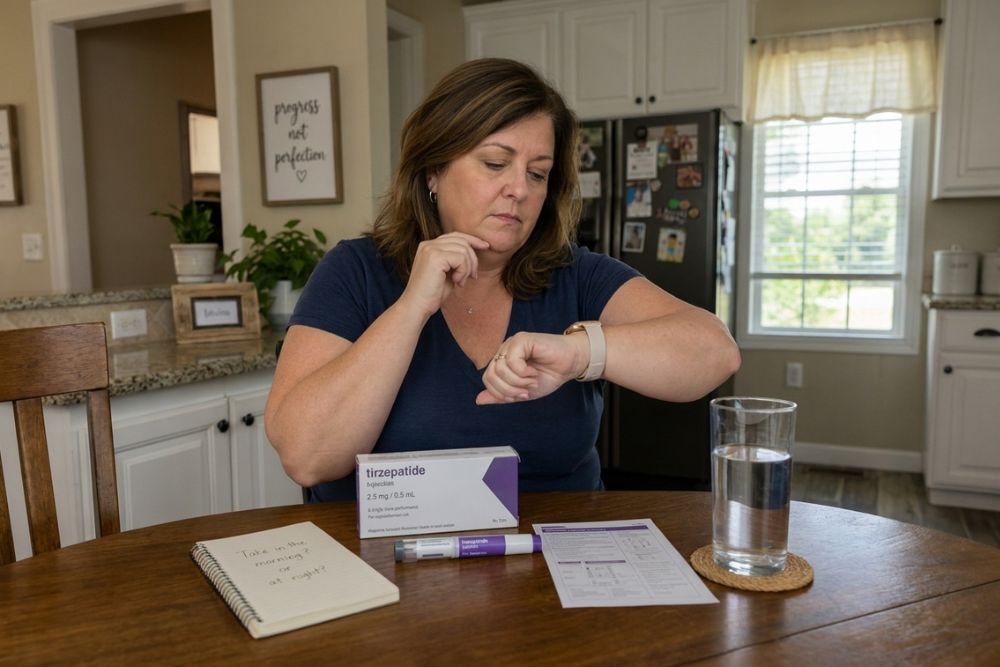
You can take your Zepbound shot in the morning or at night. According to the FDA-approved prescribing information, Zepbound can be injected once weekly at any time of day, with or without food.
For most people, the best time to take Zepbound is the time they can follow consistently. However, morning dosing may be more practical when you are starting treatment, increasing your dose, or experiencing nausea, reflux, fatigue, or sleep disruption.
There is no evidence that Zepbound works better in the morning or at night.
Choose a time based on:
At Synchronicity Health in Sacramento, medication timing is considered alongside the patient’s dose, medical history, other medications, eating patterns, side effects, and weekly schedule. The goal is not simply to choose a convenient hour. It is to create a treatment routine that is safe, tolerable, and sustainable.
The FDA-approved instructions state that Zepbound may be administered:
You do not need to fast before taking Zepbound, and you do not need to coordinate your injection with breakfast, dinner, or bedtime.
The medication is designed to remain active throughout the week. Tirzepatide, the active ingredient in Zepbound, has an elimination half-life of approximately five to six days. Its median time to reach maximum concentration is about 24 hours, although this can range from eight to 72 hours.
That means Zepbound does not behave like a short-acting medication that switches on immediately after an injection and wears off several hours later. Moving your injection from 8 a.m. to 8 p.m. is unlikely to materially change its overall weight-loss effect.
These changes usually develop gradually and become more noticeable with consistency.
Morning dosing is often a practical starting point, especially during the first several weeks of treatment.
Taking your first few injections in the morning allows you to observe how you feel during the day. This can make it easier to notice nausea, dizziness, fatigue, reflux, appetite changes, or an injection-site reaction.
Not every side effect begins immediately. Because tirzepatide reaches peak concentration gradually, symptoms can appear later that day or over the following one to three days. Morning dosing does not prevent delayed symptoms, but it can make the initial treatment routine feel more manageable.
Zepbound is generally started at 2.5 mg once weekly and increased gradually. Gastrointestinal side effects are particularly common during dose escalation and often become less pronounced as the body adjusts.
Scheduling a dose increase for the morning of a relatively flexible day can give you time to:
Do not delay or accelerate a dose increase without guidance from your prescribing provider.
Checkout our guide on Medical Weight Loss an read what you need to know before getting started
Zepbound delays gastric emptying, particularly after the first dose. Some patients also experience indigestion, belching, abdominal fullness, or gastroesophageal reflux.
If you are prone to nighttime reflux, taking your injection immediately before lying down may not be the most comfortable routine. The injection itself does not require an empty stomach, but a large or high-fat evening meal combined with delayed digestion may worsen fullness or reflux in some patients.
Taking Zepbound earlier in the day, eating a smaller evening meal, and remaining upright after eating may be more comfortable.
Insomnia is not listed as one of Zepbound’s common FDA-recognized adverse reactions. Nevertheless, some patients report that their sleep changes after starting tirzepatide or increasing the dose.
The disruption may be associated with nausea, reflux, reduced food intake, dehydration, a mild increase in heart rate, low blood sugar in susceptible patients, or another health issue occurring at the same time.
When sleep symptoms appear consistently after an evening injection, moving the injection to the morning may be a reasonable adjustment after discussing it with the prescribing provider.
Nighttime dosing is also acceptable and may be convenient for people who already have a reliable evening medication routine.
Fatigue was reported in Zepbound clinical trials. Some patients prefer taking their injection in the evening because they feel tired or less energetic after the dose.
However, taking the medication at night does not guarantee that fatigue will occur while you are asleep. Tirzepatide is absorbed gradually, and symptoms may develop the following day.
A predictable evening routine may make it easier to remember your weekly injection. Consistency is more important than selecting a medically “perfect” hour that is difficult to maintain.
Use a calendar reminder, medication app, recurring alarm, or another reliable system. Missing doses or taking doses too close together is more important clinically than whether the injection occurs in the morning or evening.
Taking Zepbound at night is not inherently harmful. However, it may be uncomfortable if you regularly experience:
In that situation, an earlier injection may make it easier to manage symptoms.
There is no universally best day.
Choose a day when your schedule is predictable and when you are less likely to miss the injection. During treatment initiation or dose escalation, many patients prefer a day followed by fewer obligations.
For example, a patient with a demanding Monday-through-Friday schedule may prefer Friday morning or Saturday morning. Someone who travels on weekends may be better served by a weekday schedule.
Avoid repeatedly changing your injection day simply to move side effects around. If symptoms are interfering with work, sleep, hydration, or normal activities, the dose and treatment plan may require clinical review.
You can generally change the time of day without a major adjustment, provided you continue taking only one dose each week.
You may also change the day of the week as long as there are at least 72 hours between two doses. Never take two Zepbound doses within a 72-hour period.
If you miss a dose:
Patients who have missed multiple doses should contact their provider before restarting. Depending on the length of the interruption and the previous dose, restarting at the same strength may increase the risk of side effects.
Zepbound can be taken with or without food.
There is no requirement to eat immediately before the injection. However, patients who are prone to nausea may tolerate treatment better when they avoid unusually large, greasy, or heavy meals around injection day.
A reasonable injection-day routine may include:
Do not intentionally stop eating because Zepbound has reduced your appetite. Consistently inadequate nutrition can contribute to fatigue, dizziness, muscle loss, constipation, and poor sleep.
Contact your prescribing provider if you experience persistent vomiting, severe diarrhea, significant dehydration, inability to eat or drink, repeated low blood sugar, worsening reflux, a sustained rapid heartbeat, or side effects that interfere with sleep or normal activities.
Seek urgent medical care for severe or persistent abdominal pain, especially when it radiates to the back, symptoms of a serious allergic reaction, fainting, difficulty breathing, or other severe symptoms.
The correct response to ongoing side effects is not always changing the injection time. Your clinician may need to review your dose, dose-escalation schedule, other medications, hydration, nutrition, gastrointestinal symptoms, or underlying medical conditions.
Somer Schreiber-Small, FNP-C, MSCP, is a board-certified Family Nurse Practitioner and Menopause Society Certified Practitioner with more than 20 years of healthcare experience. Her background includes acute care, cardiac telemetry, dialysis, post-acute care, medical weight management, and hormone health.
That broader clinical perspective matters because nausea, fatigue, sleep disruption, dizziness, and changes in appetite are not always caused by one factor. Effective medical weight management requires evaluating the whole patient rather than automatically increasing the dose or dismissing symptoms as normal.
Synchronicity Health provides medically supervised weight-loss care for patients in Sacramento, Natomas, West Sacramento, Elk Grove, Roseville, Davis, and surrounding communities.
No. There is no established evidence that morning injections produce more weight loss than nighttime injections. Weekly consistency and appropriate dosing are more important than the hour of administration.
Yes, but bedtime dosing may be uncomfortable if you experience reflux, nausea, abdominal fullness, restlessness, or sleep disruption.
Generally, yes. Changing the time by several hours is usually straightforward. When changing the actual day of the week, maintain at least 72 hours between doses.
No. Zepbound may be taken with or without food.
Many patients find that a morning injection on a relatively flexible day makes it easier to monitor their initial response. Your provider may recommend a different schedule based on your health history and medications.
The day may be changed when necessary, provided at least 72 hours separate two doses. Account for time-zone changes and preserve the correct interval.
This content is for informational purposes only and does not replace professional medical advice, diagnosis, or treatment. Always consult a qualified healthcare provider before making decisions about your health.
For millions of people struggling to lose weight, hunger and intense food cravings can be the biggest roadblocks. The constant

New Tirzepatide for Weight Loss In the pursuit of a healthier and more vibrant life, the quest for effective weight

How To Get Through a Weight Loss Plateau on Semaglutide Weight loss plateaus are a common and frustrating experience for